For recording poetry, the phone matters less than the room. Every record poetry recitation app runs on both platforms now, the microphones have converged, and the differences that remain are smaller than the difference a quiet bedroom makes. Point by point:
1. Microphones: flagship Android and iPhone mics are both excellent now. Mid-range Android varies more; test yours with a whisper passage.
2. Recording apps: good abritti apps exist on both platforms. Check for echo, reverb, and music beds, not the OS badge.
3. Background noise: Android's noise suppression is aggressive and can eat soft consonants. iPhone is gentler. Poetry lives in soft consonants.
4. File management: Android makes finding your WAV files easier. iOS hides them better, which is either tidy or maddening.
5. The room: a quiet room with soft furnishings beats any phone upgrade. Record in the bedroom, not the kitchen. Closets work.
6. The verdict: use the phone you have, fix the room, learn the mic.
The style field matters more than the operating system
Here is the stronger argument. What a recording setup must serve is not a platform; it is a repertoire. Our artist database records 55 reciters, and 38 of them state the styles they work in. Counting those style tags, with artists carrying several tags each, shows what the recorded field of abritti actually looks like:
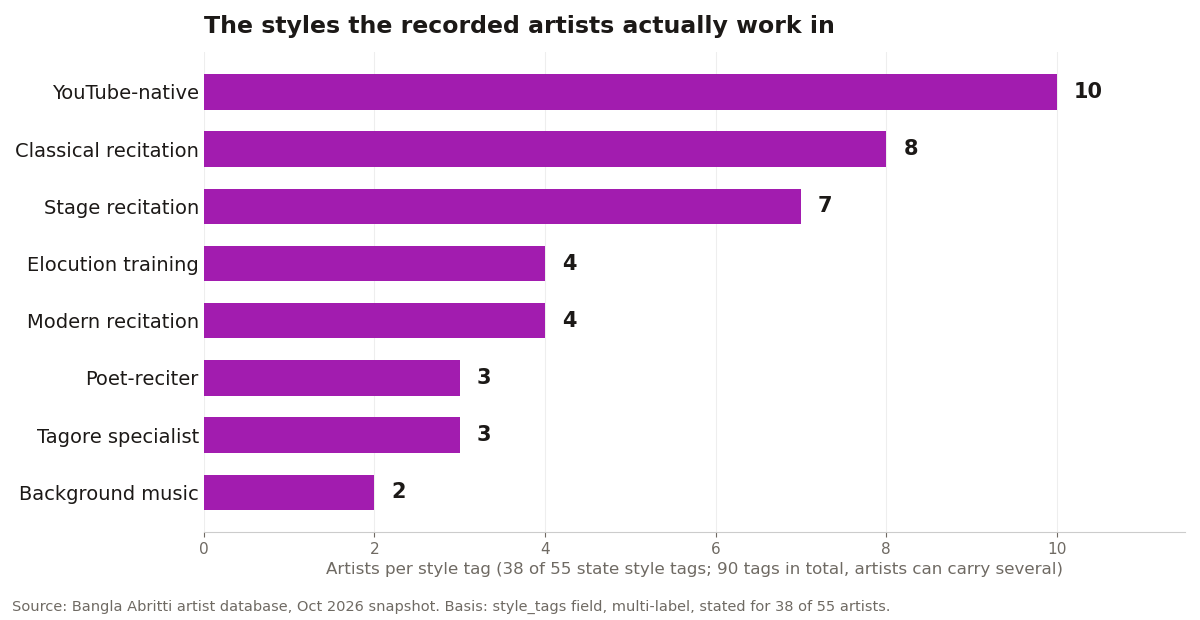
YouTube-native is the single most common tag at 10 artists, ahead of classical recitation at 8 and stage recitation at 7, with elocution training and modern recitation at 4 each. In other words, the largest group of working reciters in the record makes work for phones first: short, vertical, listened to through earbuds. A setup that serves that field needs clean close-up voice, gentle reverb and a music bed that stays under the words. Any modern phone, Android or iPhone, does that. No operating system gives you taste in mixing, and taste is the actual gap between the 10 YouTube-native artists and everyone still deciding which phone to buy.
Two upgrades that beat switching platforms
If you have money or effort to spend, spend it where the recording chain is actually weak. The first upgrade is monitoring: record while listening to yourself through ordinary wired earbuds, and you will catch the fan, the fridge hum and your own breathing before they ruin a take. The second is mic distance. A phone propped a forearm's length away, slightly off to the side, beats the same phone held close and straight on, because plosives soften and the room sounds smaller. Both upgrades work identically on Android and iOS, cost almost nothing, and improve every take you will ever make on that device. Compare that with switching platforms, which changes your file system, your app habits and your muscle memory, and improves the microphone by perhaps nothing at all.
The whisper test, done properly
Point 1 mentioned testing your phone with a whisper passage. Do it as a real test. Pick four lines you know by heart: two quiet, two loud. Record them in the room you actually record in, at your normal distance, with the phone's own recorder. Listen on earbuds, not the speaker. If the quiet lines keep every consonant and the loud lines do not clip into fuzz, your device passes and the platform debate is over for you. If consonants vanish, the fix is still not a new phone; it is distance, a quieter hour of the day, and the noise settings in your recording app, in that order.
So what should you actually check?
Three things, in order. First, record a whisper passage and a loud passage on your own phone and listen for eaten consonants; that test settles the microphone question for your specific device, which no platform comparison can. Second, check that your recording app exports a file you can find and reuse, because a recitation you cannot locate is a recitation you cannot share. Third, fix the room: soft furnishings, door closed, fan off. Our breakdown of free vs paid recitation apps covers what the paid tier adds once the basics work, and our honest comparison of the best apps for recording poetry recitation ranks the current options.
Record the test take in the Reel Maker
The Recitation Reel Maker runs the same way on either platform: record over background music with echo and reverb, export a vertical video, share it. Use it for the whisper test above. If the consonants survive and the file lands where you can find it, your phone has passed, whatever logo is on the back.
Sources: Banglapedia
The poem does not care about your OS. Listeners care about clarity, warmth, and feeling, in that order, and all three come from technique.